

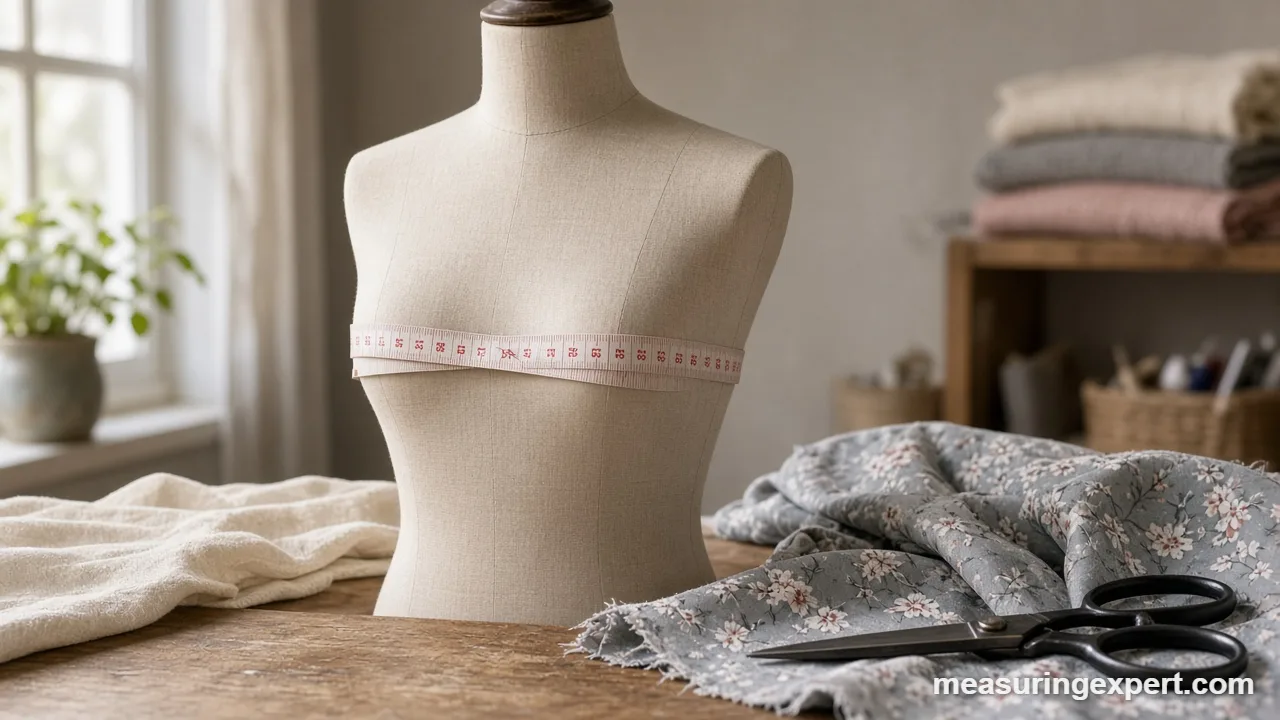
A bust measurement is the distance around the fullest part of your chest, usually straight across the nipples, with the tape level all the way around your back. You take it with a soft tape over a light, non-padded bra. Size charts list it in inches or centimeters, and 1 inch equals exactly 2.54 cm.
First of all, almost every women’s size chart starts with the same number. Dresses, blouses, jackets, swimsuits and sewing patterns all ask for it first, because the bust is usually the widest point of the upper body. For example, if a top is too small there, it pulls across the front and gaps between the buttons. If it is too big, on the other hand, the shoulders and neckline sit wrong as well.
Fortunately, this takes only about a minute. In fact, all you need is a flexible tape measure, a mirror, and ideally a second person to check that the tape stays level across your back. However, a few small details, such as which bra you wear and how tightly you hold the tape, can easily change the result by an inch or more.
What a Bust Measurement Tells You
In short: wrap a soft tape around the fullest part of your bust, keep it parallel to the floor, hold it snug but not tight, and read the number where the tape overlaps. Then compare that number with the brand’s own size chart rather than with the size you usually buy.
The New Mexico State University Cooperative Extension Service gives the same basic advice in its sewing fit guide, Check Your Pattern for Proper Fit: take the measurement over well-fitting undergarments, keep the tape parallel to the floor across the back, and have someone else hold the tape while you stand normally. In addition, the guide asks for three bust readings (above the bust, at the full bust and under the bust), which this article explains below.
Finally, the inch itself is an exact unit. The US National Institute of Standards and Technology (NIST) lists 1 inch as exactly 2.54 cm, so switching between US and European size charts involves no guesswork.
Convert Your Bust Measurement to Centimeters
First, type your number in inches, or switch the unit to centimeters if your tape reads metric. The converter uses the exact factor of 2.54 cm per inch and also shows the nearest fraction of an inch, which helps when a size chart uses the other system.
- Your bust is the circumference at the fullest part of the chest, normally across the nipples.
- Keep the tape level with the floor all the way around, including across the back.
- Wear a light, non-padded bra that fits well, because padding adds inches.
- High bust sits above the breasts; underbust sits at the bra band line.
- For bras, cup size comes from the gap between bust and underbust.
- Garment charts often add ease, so a top can measure larger than your body.
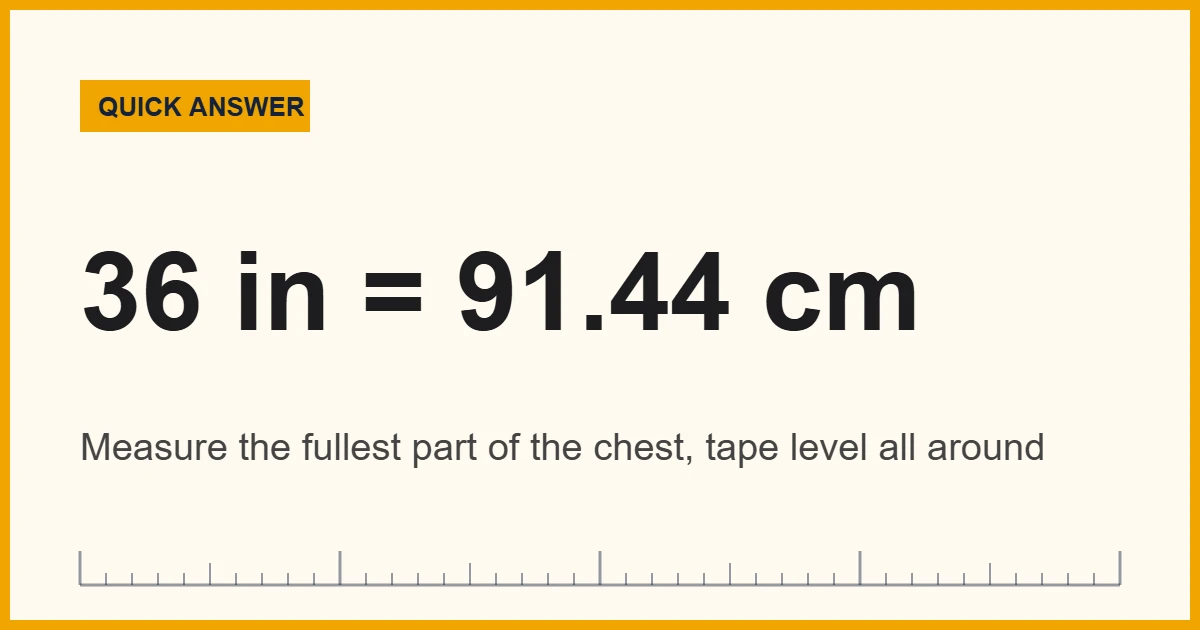
- One inch is exactly 2.54 cm, so a 36 inch bust is 91.44 cm.
Recommended Tape Measures for a Bust Measurement
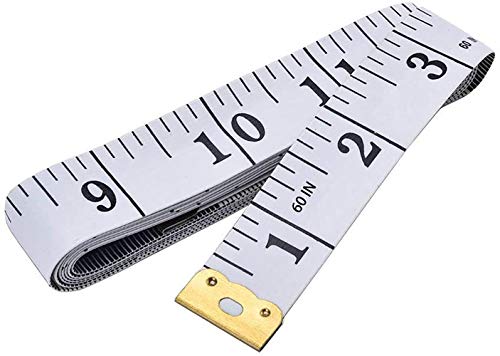
Above all, a soft tailor’s tape is the right tool here. Unlike a steel tape, it wraps smoothly around the body and lies flat against curves. In addition, look for one with inches on one side and centimeters on the other, clear 1/8 inch marks, and metal tips that will not fray. Also, a longer tape or a retractable one makes it easier to measure yourself without help.




As an Amazon Associate, Measuring Expert earns from qualifying purchases.
Full Bust vs High Bust vs Underbust
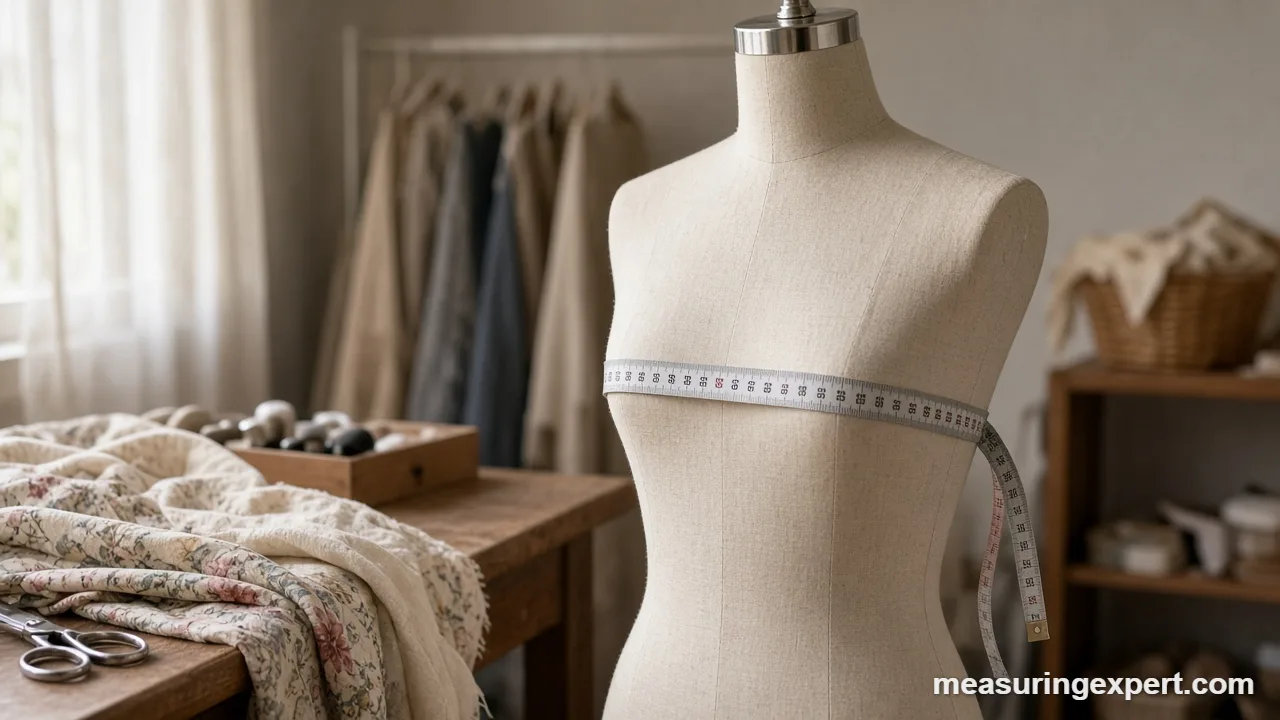
Size charts and sewing patterns use several measurements around the chest, and they are easy to mix up. So here is where each one sits.
| Measurement | Where the tape goes | Main use |
|---|---|---|
| Full bust | Around the fullest part of the breasts, usually across the nipples, level at the back | Dresses, tops, jackets, swimwear; bra cup size |
| High bust (upper bust) | High under the armpits, above the breasts, across the shoulder blades | Choosing a sewing pattern size; some bra charts |
| Underbust | Directly under the breasts, where a bra band sits on the ribcage | Bra band size; fitted bodices and corsets |
| Chest | Around the widest part of the chest, under the arms | Menswear and unisex sizing |
| Pit to pit (garment) | Across a flat garment from one armpit seam to the other | Checking a shirt you already own |
In other words, “bust” and “chest” describe the same area, but the bust figure is taken at the fullest point. For a garment lying flat, our guide to the pit to pit measurement explains how a flat width relates to the body measurement.
How to Take a Bust Measurement Step by Step
Overall, this method follows the extension guide above. Set aside a couple of minutes, and stand in front of a mirror so you can see the back of the tape.
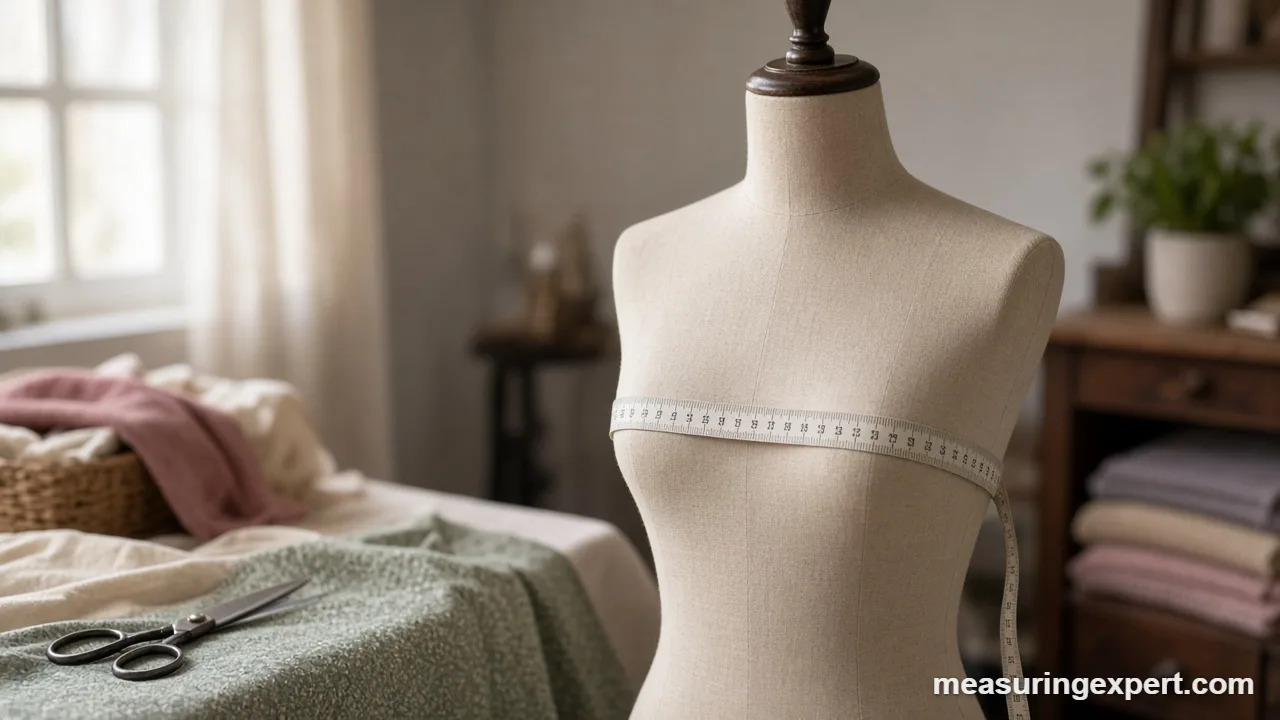
- Put on the right bra. Wear a well-fitting, non-padded bra, or the type of bra you plan to wear under the garment.
- Stand in a relaxed posture. Keep your feet together, shoulders down and arms loose at your sides.
- Wrap the tape around your back. Bring it under your arms and across your shoulder blades to the front.
- Find the fullest point. Place the tape across the fullest part of your bust, usually over the nipples.
- Level the tape. Check in the mirror that it stays parallel to the floor all the way around and does not dip at the back.
- Hold it snug, not tight. The tape should touch your body without pressing in or flattening the breasts.
- Breathe out and read. After a normal exhale, read the number where the zero end meets the tape.
- Repeat once or twice. Then round to the nearest 1/2 inch (1.27 cm) and write the number down in both units.
Taking a Bust Measurement on Your Own
A helper makes this easier, mainly because they can see your back. Still, you can get a good result alone. First, stand sideways to a mirror, or use two mirrors, so you can see the tape at your back. Next, hold the zero end against your chest with one hand and feed the tape around with the other. Then lower your arms before reading, since raised arms lift the bust and change the number.
A retractable tape helps here, because it stays wrapped while you check its level. Otherwise, pinch the tape where it overlaps, take it off carefully, and read it against a table.
How Size Charts Use Your Bust Measurement
In general, most charts list a body measurement for each size. So you match your number to the closest row, not your usual size. For example, if your bust is 37 inches and a brand lists 36 inches for size M and 38 inches for size L, check the waist and hip rows too, then decide on fit and fabric. In that case, the larger size is often the safer pick for woven fabrics without stretch, while a knit top may fit in the smaller one.
However, some charts list the finished garment instead. In other words, finished measurements include ease, the extra room that lets you move and breathe. Therefore, a blouse that “measures 40 inches at the bust” may be meant for a 36 or 37 inch body. If a chart does not say which type it shows, look for a line such as “body measurements” or “garment measurements”, or ask the seller.
Similarly, sewing patterns work the same way. ASTM International publishes body measurement tables for women’s misses sizes 00 to 20 in standard D5585, and the tables are meant as a baseline that designers adjust for fabric, ease and style. As a result, pattern sizes do not match store sizes, and you should always pick a pattern from your measurements.
When your full bust is much larger than your high bust, many sewing teachers suggest picking the pattern size by the high bust and then adding room at the bust (a “full bust adjustment”). That way, the shoulders and neckline fit, and only the front gets wider.
Bust Measurement and Bra Size
In contrast, a bra size needs two numbers. The band comes from the underbust, and the cup comes from the difference between the bust measurement and the band. For instance, ThirdLove’s bra size guide says to measure snugly around the ribcage for the band, then around the fullest part of the bust, and to count one cup size for each inch of difference.
| Bust minus band | In centimeters | Cup (common US lettering) |
|---|---|---|
| 1 in | 2.54 cm | A |
| 2 in | 5.08 cm | B |
| 3 in | 7.62 cm | C |
| 4 in | 10.16 cm | D |
| 5 in | 12.70 cm | DD or E (varies by brand) |
For example, a 34 inch band with a 37 inch bust gives a 3 inch difference, which is a C cup, so the size is 34C. Keep in mind that letters above D differ between US, UK and European brands, and some brands use their own band rules. So treat the result as a starting size, not a final answer. Our guide on how to measure bra size covers the band and cup steps in more detail.
Bust Measurement Chart: Inches to Centimeters
All values below use 1 inch = 2.54 cm exactly, rounded to two decimals. Also, you can print this table or bookmark the converter above.
| Inches | Centimeters | Inches | Centimeters |
|---|---|---|---|
| 30 | 76.20 | 38 | 96.52 |
| 32 | 81.28 | 40 | 101.60 |
| 34 | 86.36 | 42 | 106.68 |
| 35 | 88.90 | 44 | 111.76 |
| 36 | 91.44 | 46 | 116.84 |
Conversely, to go the other way, divide centimeters by 2.54. For instance, 90 cm is about 35.43 inches and 100 cm is about 39.37 inches, so a European chart that lists a 90 cm bust is close to a US 35 1/2 inch figure.
Do’s and Don’ts for Measuring Your Bust
- Wear a light, well-fitting bra.
- Keep the tape level around your back.
- Read after a normal breath out.
- Round to the nearest 1/2 inch.
- Check each brand’s own chart.
- Use a steel or construction tape.
- Pull the tape tight enough to press in.
- Measure over padding or thick clothes.
- Hold your breath or lift your arms.
- Assume your usual size fits every brand.
Honest Limits of a Single Bust Measurement
A bust number is very useful, but it has limits. First, the same person can read an inch apart on different days, because posture, breathing, bra choice and tape tension all play a part. Next, the breasts can change size over a monthly cycle, during pregnancy and with weight changes, so an old number may no longer be right. Also, two people with the same bust can need different sizes, since shoulder width, back width and shape matter as well. Finally, brands cut differently, so the same size letter can fit two ways. For these reasons, use your bust measurement as a strong starting point, then confirm it with the size chart and, when possible, a try-on.
When to See a Professional Fitter
For everyday tops, a home measurement is usually enough. However, a trained bra fitter or tailor is worth a visit for wedding and formal dresses, for structured jackets, and after big body changes such as pregnancy, nursing or surgery. In addition, a fitter can check the fit of a bra on your body, which a tape cannot do. Similarly, a tailor can take your waist and hip readings at the same time; our guide on how to measure your waist covers that step.
Bust Measurement FAQs
What is a bust measurement?
It is the circumference around the fullest part of your chest, usually across the nipples, with the tape kept level around your back. Clothing size charts use it to match you to a size.
Is bust size the same as chest size?
Not quite. Both go around the chest, but the bust is taken at the fullest point of the breasts, while a chest measurement for menswear is usually taken higher, under the arms.
Should I wear a bra when measuring my bust?
Yes. Wear a well-fitting, non-padded bra, or the type you will wear under the garment. Padding or push-up styles can add an inch or more.
How tight should the tape be?
Snug but not tight. The tape should rest on your body without pressing in, and you should be able to breathe normally.
What is the difference between high bust and full bust?
High bust is taken above the breasts, high under the arms. Full bust is taken at the fullest point. Sewing patterns often use both to choose a size and plan adjustments.
How do I measure my bust without help?
Stand sideways to a mirror, wrap a soft tape around your back and across the fullest point, lower your arms, check that the tape is level, and read it after a normal exhale.
How many centimeters is a 36 inch bust?
A 36 inch bust is 91.44 cm, because one inch is exactly 2.54 cm. A 34 inch bust is 86.36 cm and a 38 inch bust is 96.52 cm.
Is my bust size the same as my bra size?
No. A bra size combines the underbust (band) with the gap between bust and band (cup). Each inch of difference usually equals one cup size.
Should I round my number up or down?
Round to the nearest 1/2 inch. If you fall between two sizes, compare the waist and hip rows too, and consider the fabric before you choose.
How often should I measure my bust?
Measure again before any important purchase, and after weight changes, pregnancy or nursing. A number from a year ago may no longer match your body.
Bottom Line on Bust Measurement
In summary, your bust measurement is simply the distance around the fullest part of your chest. To get it right, wear a light bra, keep a soft tape level around your back, hold it snug, and read it after a normal breath out. Then repeat it once and round to the nearest half inch.
Next, once you have the number, use the converter above to switch between inches and centimeters, and match it to each brand’s chart rather than your usual size. If you also need your underbust for a bra, or your high bust for a sewing pattern, take those readings at the same time so all three numbers agree.
2 thoughts on “What Is a Bust Measurement? How to Measure Your Bust for Clothing Sizes”