

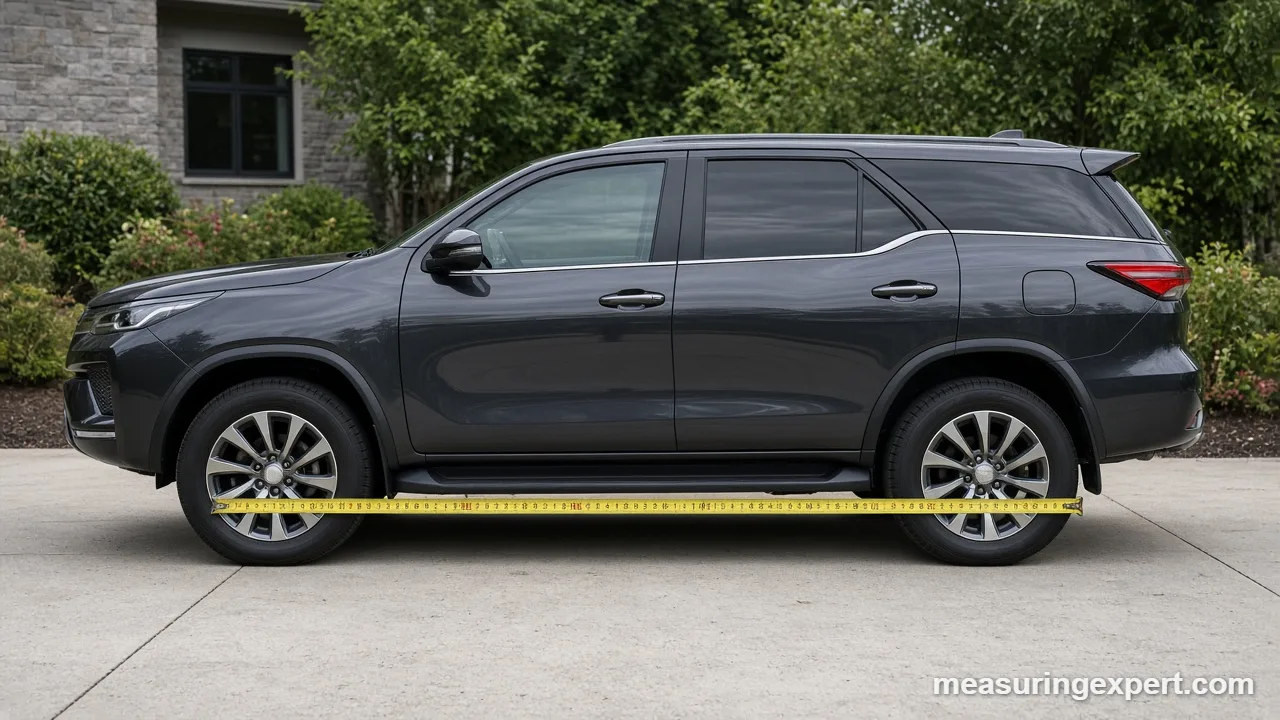
Wheelbase is the straight-line distance between the center of the front wheel and the center of the rear wheel on the same side of a vehicle. For example, a 2025 Honda Civic sedan has a 107.7-inch wheelbase, or about 273.6 cm. Measure it hub center to hub center with the wheels pointing straight ahead.
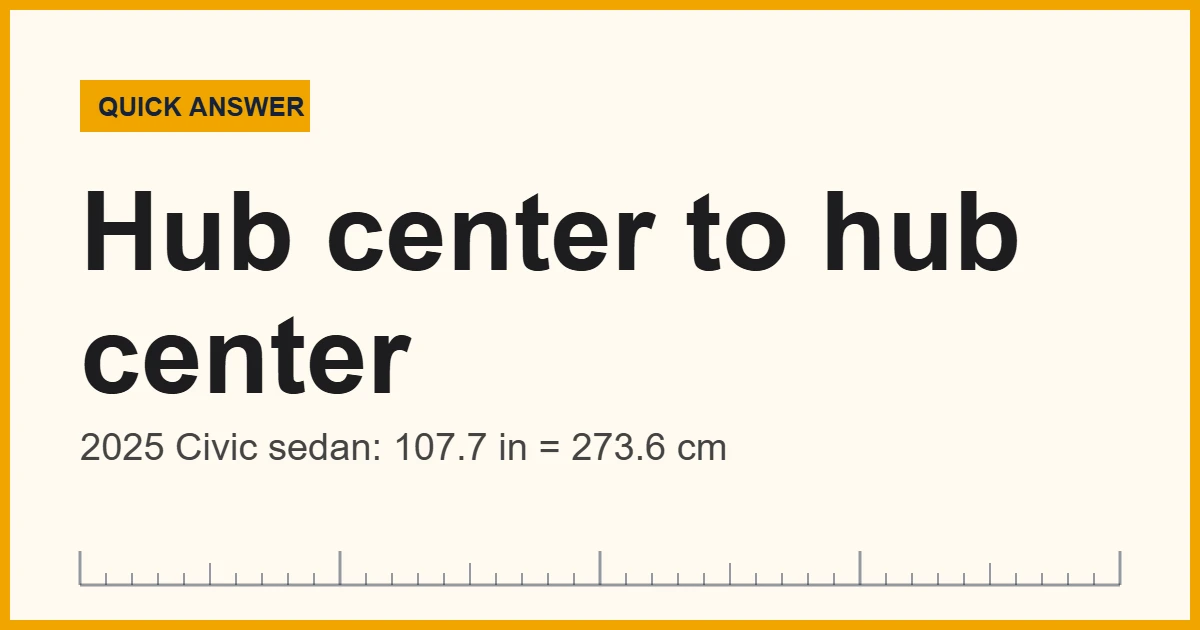
The number shows up on every spec sheet, yet few people know what it really tells them. Wheelbase is not the length of the car, and it is not the distance between the bumpers. Instead, it is the span between the two points where the body is held up by its axles, so it shapes how a vehicle rides, turns and climbs.
That span matters in daily life more than you might expect. A long one smooths out bumps and leaves room for a big cabin. A short one, on the other hand, lets a car squeeze into tight parking spots and swing through a U-turn. Truck owners, trailer builders and anyone buying a lift kit or a bike rack also need the figure, because parts and legal axle limits depend on it.
In short: wheelbase is the axle-to-axle distance, it is measured between wheel centers, and it trades maneuverability for stability.
Manufacturers publish the figure in their official specifications. Honda, for instance, lists the Civic sedan’s wheelbase as 107.7 inches next to an overall length of 184.8 inches in its 2025 Civic sedan specifications. As a result, you can see at a glance how much of the car hangs past each axle.
Below, you will find a converter, the tools that make the job easy, a step-by-step method you can do in a driveway, and a clear look at what the number does and does not tell you.
Convert a Wheelbase Between Inches, Feet and Centimeters
US spec sheets give the figure in inches, while European and Asian brands use millimeters. So type the number you have, pick its unit, and the converter shows the rest using the exact definition 1 inch = 25.4 mm.
Recommended Tools for Measuring Wheelbase
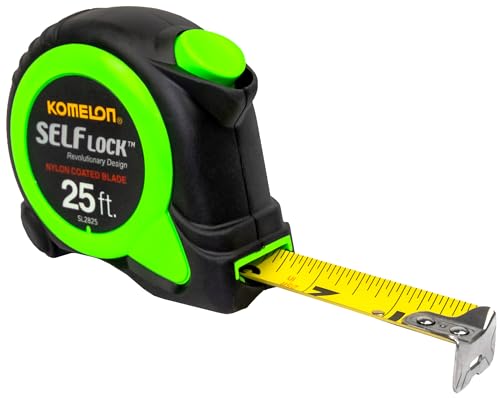
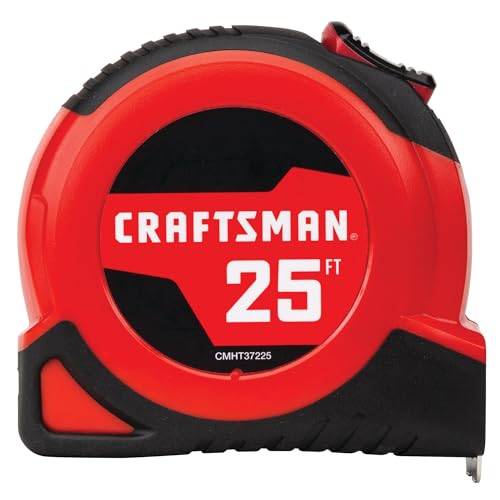
You do not need shop equipment. First, a 25-foot tape measure with a stiff blade covers any car or pickup. Next, a laser distance measurer helps when you work alone, because it reads the distance from one mark to a target without a helper holding the hook. Finally, a plumb bob transfers the hub center down to the floor, which makes the reading far more repeatable than measuring in midair.




As an Amazon Associate, Measuring Expert earns from qualifying purchases.
- Wheelbase runs from the center of the front wheel to the center of the rear wheel.
- Overall length, track width and wheelbase are three different dimensions.
- A longer span usually rides smoother and feels steadier at highway speed.
- A shorter span usually turns tighter and clears steep crests more easily.
- On trucks with tandem rear axles, the rear point is the midpoint between the two axles.
- Measure both sides; a left-to-right difference can point to bent or shifted parts.
- Use the manufacturer’s spec as the reference, not a forum average.
What Wheelbase Means on a Spec Sheet
Picture the car from the side. Now draw a vertical line through the middle of the front hub and another through the middle of the rear hub. The horizontal gap between those two lines is the figure the spec sheet reports. Because the wheels are round, the hub center is also the point directly above where each tire touches the road, so this is the span over which the body is supported.
Engineers care about it because it sets the lever arm for weight transfer. When you brake, weight shifts forward; when you accelerate, it shifts back. Over a longer span, the same braking force moves less load from one axle to the other, so the nose dips less. Similarly, the span decides how much room the designers have for seats, a battery pack or a cargo bed between the axles.
Wheelbase vs Length vs Track Width
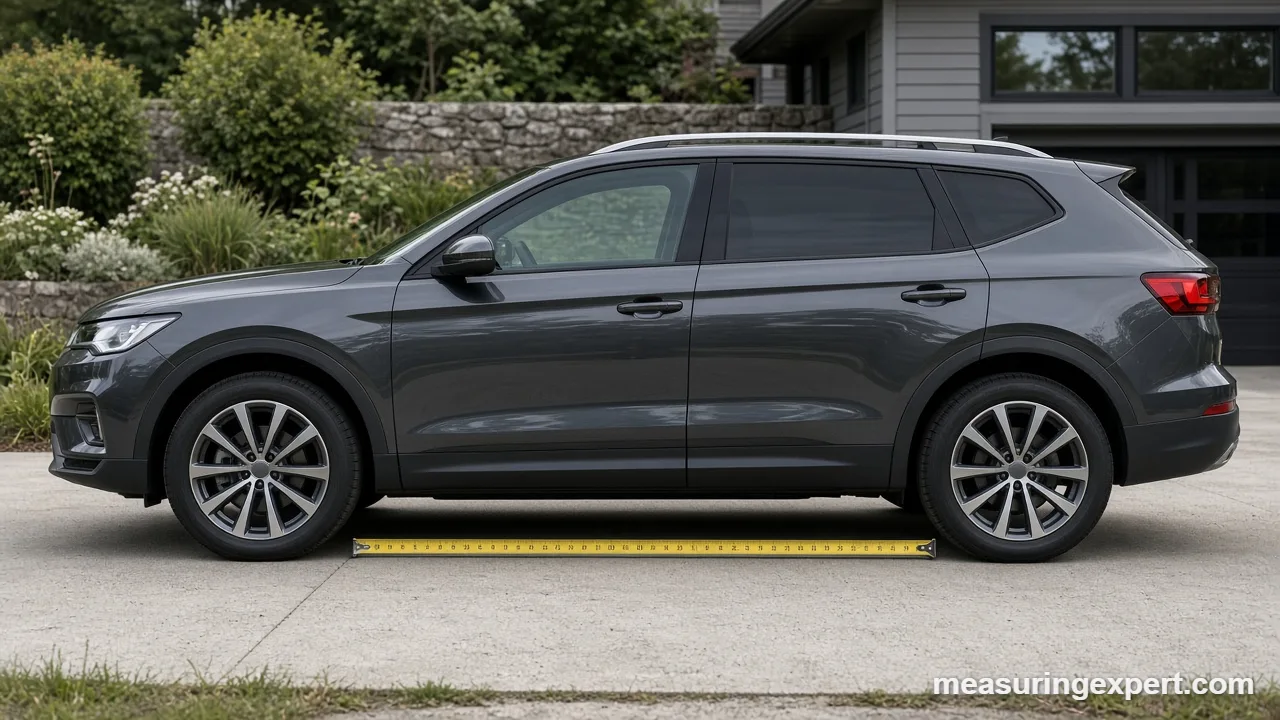
Three dimensions get confused all the time, even in sales listings. This table separates them.
| Dimension | Measured from | What it affects |
|---|---|---|
| Wheelbase | Front wheel center to rear wheel center, same side | Ride, stability, turning, cabin or bed space |
| Overall length | Front bumper to rear bumper | Garage and parking fit |
| Track width | Left tire center to right tire center, same axle | Cornering roll and side-to-side stability |
| Overhang | Axle center to the bumper at that end | Approach and departure angles, curb scrapes |
Taking the Civic again, its overall length of 184.8 inches minus the 107.7-inch span leaves 77.1 inches of total overhang shared between the front and rear. In other words, almost 42 percent of the car’s length sits outside its axles.
How to Measure Wheelbase Yourself
A driveway check takes about 15 minutes. Two people make it easier, although a laser measure lets you do it alone.
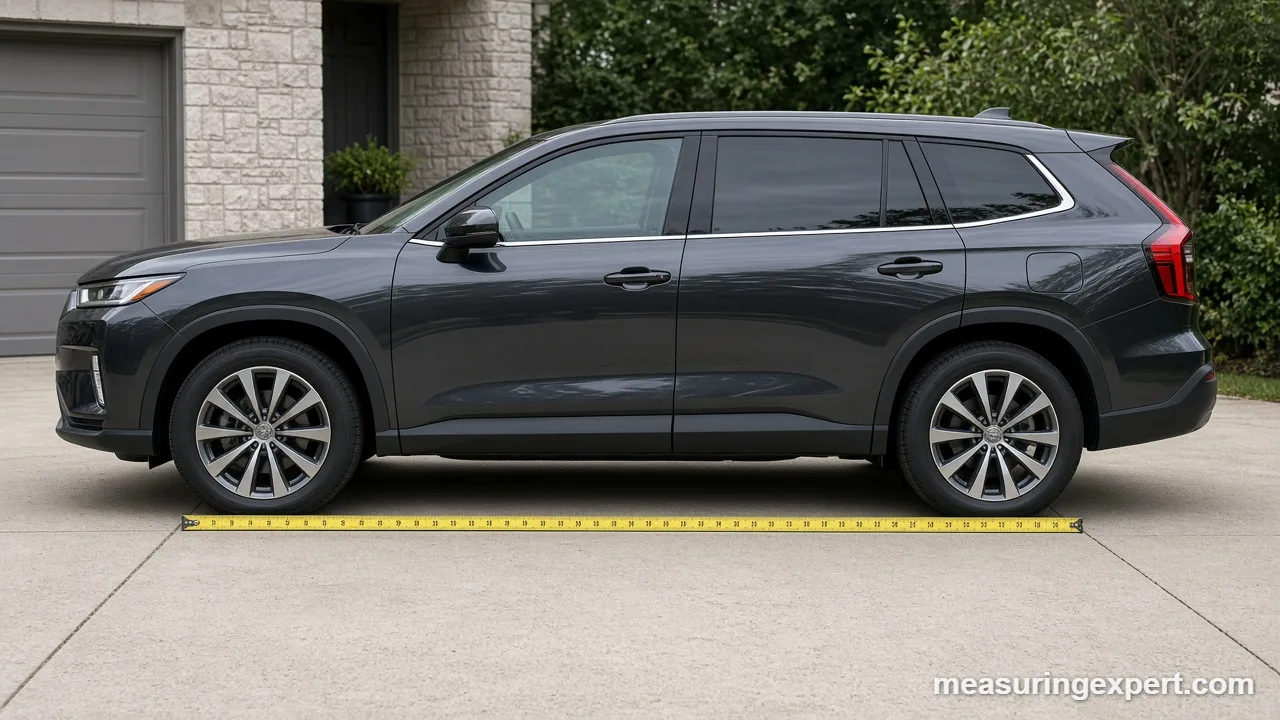
- Park on level ground. Leave the vehicle on its wheels with normal tire pressure, since jacking it up changes the suspension geometry.
- Point the front wheels straight ahead. Turned wheels move the front hub center forward or back slightly.
- Find each hub center. Look for the center cap, the axle nut or the middle of the lug-nut circle on the front and rear wheels.
- Drop a plumb line from each center. Hold the string against the hub and let the bob settle just above the floor, then mark that spot with a strip of masking tape.
- Measure between the two floor marks. Pull the tape tight and straight, parallel to the side of the car, and read it to the nearest 1/8 inch.
- Repeat on the other side. Then compare both readings with each other and with the published spec.
If you want more background on tape and laser accuracy, our guide to tools to measure length compares them side by side. Also, the small diamonds you may see along the blade are explained in what the diamond on a tape measure is for.
Typical Wheelbase by Vehicle Type
Every model is different, so treat the ranges below as rough guides rather than rules. Check the exact figure in the owner’s manual or on the maker’s spec page before you buy parts.
| Vehicle type | Rough range (in) | Rough range (cm) |
|---|---|---|
| Two-seat roadster or city car | about 90-100 | about 229-254 |
| Compact car (e.g. Civic: 107.7) | about 100-110 | about 254-279 |
| Midsize sedan or crossover | about 105-115 | about 267-292 |
| Full-size SUV or minivan | about 115-130 | about 292-330 |
| Full-size crew-cab pickup | about 140-160 | about 356-406 |
Pickups vary the most because the same truck is often sold with several cab and bed lengths. Therefore, a “short bed” and a “long bed” version of one model can differ by more than a foot. If you switch between units often, our explainer on metric vs imperial covers the conversions.
How Wheelbase Changes Ride, Handling and Turning
A longer span spreads the axles apart, so a bump lifts the front and then the rear at different moments. As a result, the body pitches less and the ride feels calmer. At highway speed it also tends to track straight with less steering correction. That is one reason long sedans and full-size vans feel relaxed on the interstate.
The trade-off is turning. Using the simple “bicycle model” of steering, the front wheel follows a circle with radius equal to the span divided by the sine of the steering angle. Here is what that means for two spans at the same 35-degree steering angle.
| Span | Steering angle | Front-wheel path radius (approx.) |
|---|---|---|
| 9 ft (108 in) | 35° | 15.7 ft |
| 12 ft (144 in) | 35° | 20.9 ft |
So a third more span means a third wider circle at the same steering lock. Real turning circles are larger still, because published curb-to-curb figures include tire width and the actual steering geometry. Honda, for example, lists 36.1 feet curb to curb for the Civic LX, which is a radius of about 18 feet.
Wheelbase and Off-Road Clearance
Older guides often claim a longer span is always better off road. That is only half true. On loose hill climbs, a longer vehicle does resist tipping backward. On sharp crests and rock ledges, though, the belly is more likely to hang up, because the midpoint sits farther from both tires.
The breakover angle shows this. With 10 inches of ground clearance at the middle and a simplified flat-ground model, the angle works out as follows.
| Span | Clearance at midpoint | Breakover angle (simplified) |
|---|---|---|
| 96 in | 10 in | about 23.5° |
| 120 in | 10 in | about 18.9° |
| 145 in | 10 in | about 15.7° |
That is why short two-door off-roaders are popular for rock crawling, while longer four-door models trade some crest clearance for cabin room and a steadier ride.
Wheelbase on Trucks, Trailers and Multi-Axle Rigs
On a truck with two rear axles side by side, the rear reference point is usually the midpoint between them. Body builders then use the cab-to-axle figure to decide whether a dump body, flatbed or service box will fit.
For road weight limits, the rules look at axle spacing rather than a single number. The Federal Highway Administration’s Bridge Formula Weights guide defines L as the distance in feet between the outer axles of any group of two or more consecutive axles. Put simply, spreading the same load over a longer group lowers the stress on a bridge, so the legal weight for that group goes up.
Do and Don’t When Measuring Wheelbase
Do
- Park on level, firm ground.
- Keep the front wheels straight.
- Transfer hub centers to the floor.
- Measure both sides of the vehicle.
- Record inches and millimeters.
Don’t
- Measure from tire tread to tire tread.
- Read the tape while it sags.
- Confuse overall length with axle spacing.
- Rely on a forum average for parts fitment.
- Crawl under a car held only by a jack.
Honest Limits of a Driveway Measurement
A tape and plumb bob get you close, not to factory precision. For one thing, finding the exact hub center by eye can be off by a quarter inch at each end. Moreover, many cars have slightly different left and right figures by design, and suspension bushings let the axles shift a little under load. Even the spec sheet figure is a nominal design value, not a guarantee for every car off the line.
Single numbers also hide a lot. Two cars with the same span can handle very differently because of weight distribution, tires, suspension tuning and center-of-gravity height. Use the figure to compare vehicles and check fitment, but do not treat it as the whole story about handling.
When to Call a Professional
If the two sides differ noticeably, if the car pulls or “dog tracks” (the rear follows slightly off to one side), or if it has been in a collision, book a frame or alignment check. Alignment shops and collision repairers measure against the factory data with laser or computerized systems, which is far more precise than a tape. Likewise, anyone planning a truck body upfit or an axle conversion should work with a qualified upfitter.
Wheelbase FAQs
What is wheelbase in simple terms?
It is the distance from the center of the front wheel to the center of the rear wheel on the same side of a vehicle.
Is wheelbase the same as the length of a car?
No. Overall length runs bumper to bumper, so it is always longer. The difference is the front and rear overhang.
How do you measure wheelbase at home?
Park on level ground with the wheels straight, drop a plumb line from each hub center, mark the floor, and measure between the marks on both sides.
Is a longer wheelbase better?
It depends on the job. A longer span usually rides smoother and feels steadier, while a shorter one turns tighter and clears steep crests more easily.
Does a shorter wheelbase turn tighter?
Yes, at the same steering angle. Steering lock and tire size also matter, so compare published turning diameters for the real answer.
What is the wheelbase of a Honda Civic?
Honda lists 107.7 inches for the 2025 Civic sedan, which is about 273.6 cm.
Where is the rear point on a truck with two rear axles?
It usually runs from the steering axle to the midpoint between the two rear axles.
Why would the left and right sides measure differently?
Small differences can be normal, but a noticeable gap may mean a shifted axle, worn bushings or frame damage. Have an alignment or frame shop check it.
Can the axle spacing change over time?
Not in normal use. However, lift kits, axle swaps, worn parts and collision damage can change it slightly.
Which units do spec sheets use for it?
US spec sheets usually list inches, and most other markets list millimeters. One inch is exactly 25.4 mm.
The Bottom Line
To sum up, wheelbase is the hub-to-hub span between the front and rear axles, not the bumper-to-bumper length. You can check it at home with a tape measure, a plumb bob and level ground, then compare both sides with the manufacturer’s spec.
Finally, remember what the figure tells you: more span generally means a calmer ride and more room, and less span means tighter turns and better crest clearance. For anything beyond a driveway check, such as frame damage or a truck upfit, let a professional measure it.