

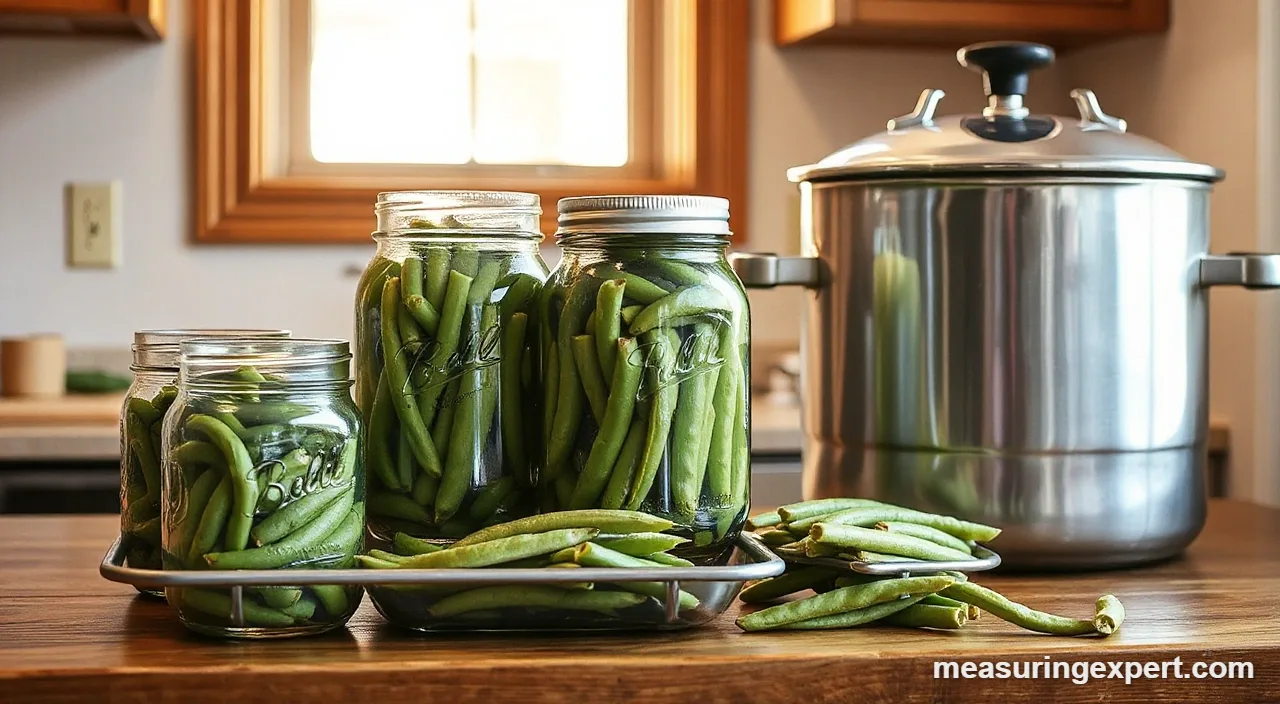
A garden hits its peak, the green beans keep coming, and you are standing in a store aisle comparing canners that run from about 10 quarts to well over 40. Size sounds like the easy part, yet it decides how many jars you process per load, whether the pot fits your stove, and how many evenings you spend at the counter.
For most home canners, a 16 to 23 quart pressure canner is the right size. Any canner you buy for tested recipes must hold at least four quart jars standing upright with the lid on, which is the minimum the USDA process times assume. A 16 quart model handles small batches, a 21 to 23 quart model holds seven quart jars or roughly 19 to 20 pints in two layers, and 30 quarts and up suits big gardens and shared canning days. Pick by your usual batch, your stove and your storage space, and never substitute a small pressure cooker, because it does not meet the canning standard.
In short: pick the canner that holds one full batch of your most common jar size, confirm that it fits your burner, and size up only if you regularly run more than two loads in a day.
The National Center for Home Food Preservation, the research hub behind the USDA canning guidance, says the same thing in plain words: small pressure saucepans are not recommended for canning, and a canner should hold at least four quart jars. Its page on using pressure canners also covers venting and gauge testing, and Penn State Extension adds practical stove advice in buying a pressure canner: what to consider.


Buying from this list? Get it fast, and catch Black Friday deals, with Prime
Quarts to Liters: Compare Canner Sizes
Canner listings use quarts in the US and liters almost everywhere else. Type the size from the box, pick quarts, and the converter shows liters, gallons and more.
Below you will find the common sizes and what each holds, the difference between a canner and a cooker, a step-by-step way to match a size to your harvest, and how gauges and stoves change the choice. The converter turns quarts into liters or gallons when you compare listings from different countries.
- The USDA minimum is a canner that holds four quart jars upright with the lid on.
- 16 to 23 quarts fits most households; 30 quarts and up fits large gardens.
- A 21 to 23 quart canner typically holds 7 quarts or 19 to 20 pints in two layers.
- A pressure cooker or electric multi-cooker is not a substitute for a canner.
- Check burner size, stove type and weight limits before you buy.
- Weighted gauges use 10 or 15 psi; dial gauges run 11 to 14 psi by altitude.
- Test a dial gauge every year before the season.
The math is liters = quarts x 0.946352946 (one US quart is exactly 0.946352946 L). Remember that the stamped number is the total volume of the pot, not the space available for jars.
The 4-Jar Minimum: Where Every Canner Size Starts
Home canning recipes from the USDA and its partner universities were tested in canners that hold at least four quart jars upright with the lid in place. That detail is not a marketing line. A canner of that size heats up and cools down at a rate that the tested process times account for, and the steam volume matters when you vent the pot before you put the weight or gauge in place.
Smaller pots, such as the 4 to 8 quart pressure cookers sold for dinner, change that heat curve. They come to pressure quickly and drop quickly, which can leave the center of a jar short of the time it needs. Because the risk with low-acid foods like beans, corn, meat and soup is botulism, the safe rule is simple: if the pot does not hold four quart jars, it is not a canner.
The minimum also gives you a floor for your budget. Anything labeled a canner and rated for four quarts or more is a candidate, and everything above that is a question of convenience.
Pressure Canner Sizes and What They Hold
The number on the box is the total volume of the pot in US quarts. Jar capacity is what really matters, and it depends on rack design, pot height and whether the model lets you stack pints in two layers. Treat the table as a guide and confirm the jar count in your own manual or the maker’s specifications.
| Canner size class | Typical load (check your manual) | Good fit for | Trade-off |
|---|---|---|---|
| About 10 to 12 qt | 4 quart jars or about 7 pints | One or two people, small test batches | Smallest that meets the 4-jar rule; more loads per harvest |
| 16 qt | About 4 quart jars or 9 to 10 pints, one layer | Small households, apartment kitchens | Often a single layer of quarts only |
| 21 to 25 qt | 7 quart jars, or 19 to 20 pints in two layers | Most families with a garden | Heavy when full; tall pot needs head room |
| 30 qt | Up to 14 quarts in stacking models, 19 pints | Large gardens, shared canning days | Needs a strong, level, wide burner |
| 40 qt and up | Around 19 quarts or 32 pints | Farm-scale batches, group use | Takes a long time to heat, vent and cool |
As a rule of thumb, short canners hold a single layer of jars, while taller ones accept a second layer of pints on an extra rack. One US quart is 0.946 liters, so a 23 quart canner is about 21.8 liters in total. For more on the unit itself, see our explainer on the US quart and how it compares with other quarts.
Pressure Canner vs Pressure Cooker vs Multi-Cooker
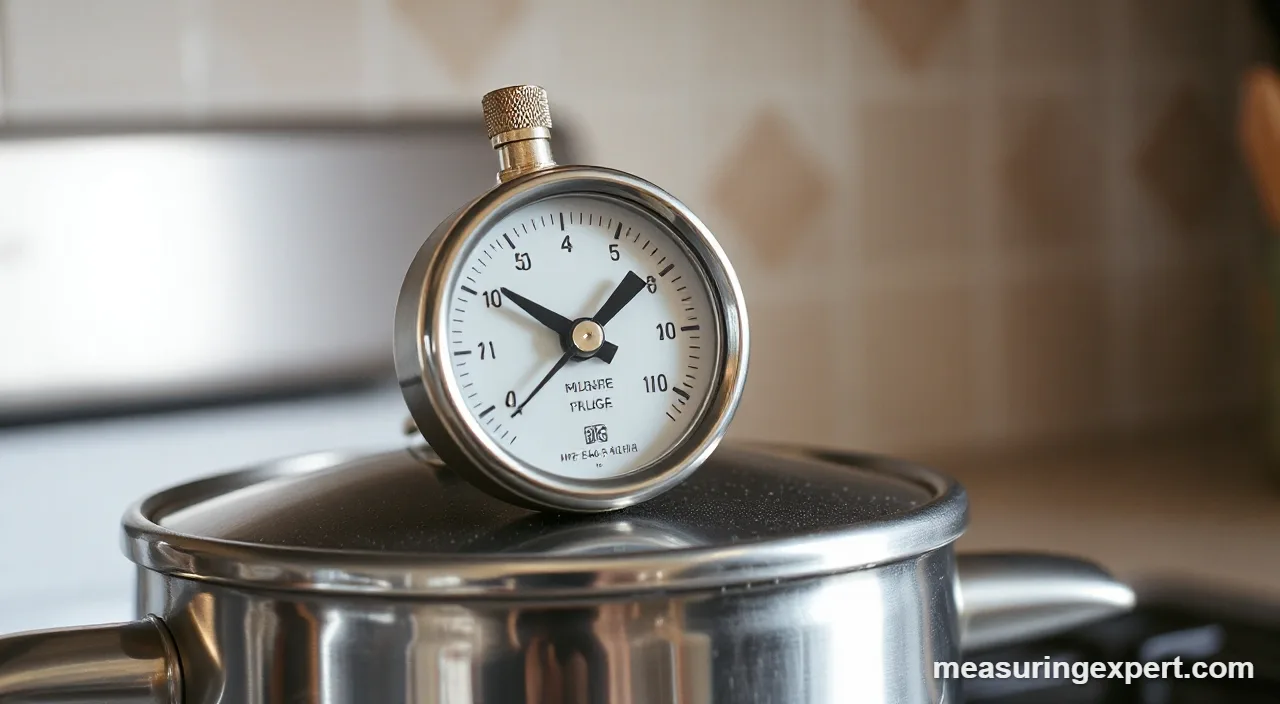
These three names get mixed up constantly, and the mix-up is the biggest size mistake of all. A pressure cooker is designed to cook dinner fast. A pressure canner is designed to hold sealed jars at a steady, verifiable temperature for a set time. Oregon State Extension puts it plainly: cookers and saucepans heat up and cool too quickly to adequately process jars.
| Feature | Pressure canner | Stovetop pressure cooker | Electric multi-cooker |
|---|---|---|---|
| Main job | Processing sealed jars of low-acid food | Fast cooking in the pot | Programmable cooking in the pot |
| Typical size | About 16 to 41 qt | About 4 to 10 qt | About 3 to 10 qt |
| Accurate pressure control | Dial or weighted gauge you can verify | Fixed regulator, no jar-process testing | Sensor-controlled; not tested for canning |
| Approved for tested canning recipes | Yes, if it holds 4 quart jars | No | No (one high-acid-only exception exists) |
| Heats and cools | Slowly, which the process times assume | Fast | Fast to moderate |
An electric multi-cooker can be a great kitchen tool, but extension guidance does not support it for low-acid canning. If you want the best of both, buy a cooker sized for meals and a canner sized for batches. Our guide to choosing a pressure cooker size covers the cooking side.
Handy Measuring Gear for Canning Day
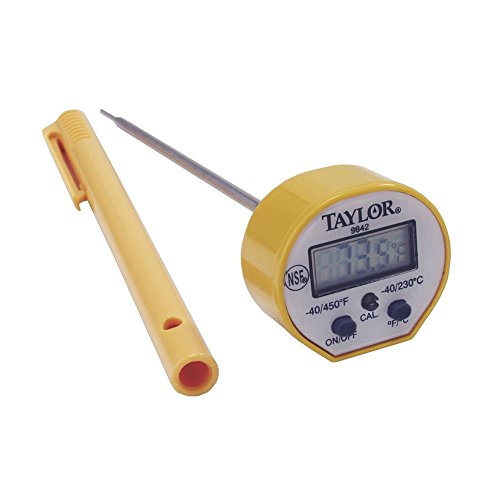
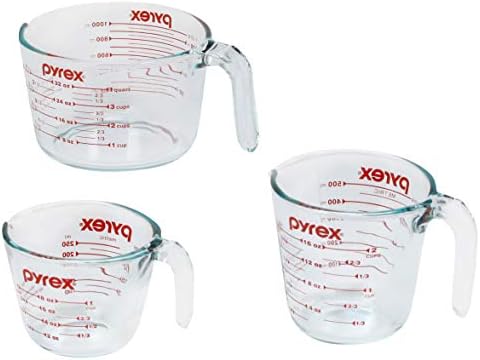
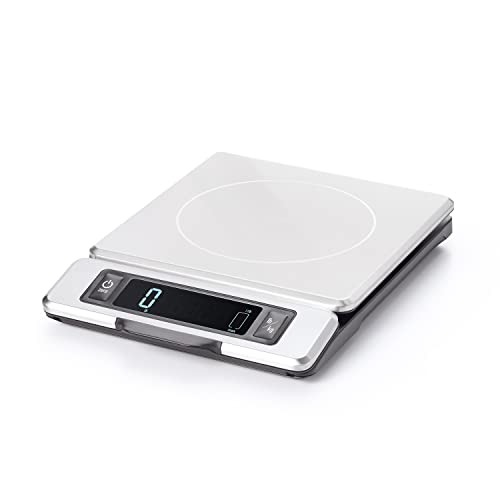
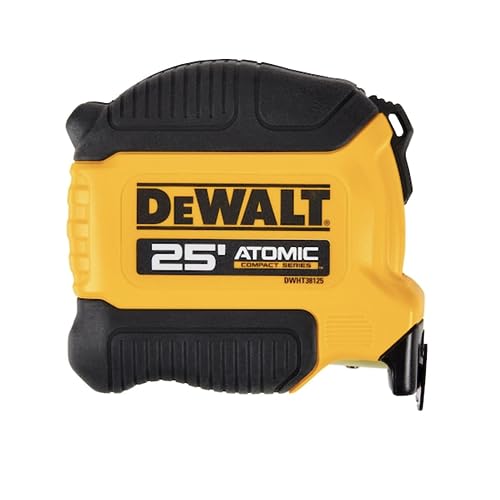
Canners themselves vary a lot by model, so check the capacity and gauge type in the manufacturer’s specifications before you buy one. The items below are the measuring helpers that make a batch go smoothly, based on manufacturer specs and buyer reports: a timer for processing and venting, a scale for produce, a glass jug for liquids, a probe thermometer for hot-pack checks, and a tape for checking your stove and shelves.
As an Amazon Associate, Measuring Expert earns from qualifying purchases.
How to Choose Your Canner Size, Step by Step
- Count your usual jars. Think about the jar size you use most, then count how many jars one picking or one store haul fills. A typical green bean session might be 7 quarts or 18 pints.
- Choose the jar size. Pints heat through faster and suit small households. Quarts fill the shelf faster but need a canner that holds them upright with the lid on.
- Match one load to one canner. Pick the canner whose published load equals your usual batch. If you often have 9 pints, a 16 quart model that holds 9 or 10 pints is plenty.
- Check the fit at home. Measure your burner, the clear space above the stove, and the shelf where it will live. Check the manufacturer weight and base diameter against your range.
- Decide on a gauge. Choose a weighted gauge if you want fewer yearly checks, or a dial gauge if you want to watch the pressure continuously and can have it tested every year.
- Plan for growth. If you expect to double your garden, step up one size class now. A larger canner can run a half load, but a small one cannot run a bigger load.
If you plan to can fruit as well, remember that high-acid foods usually go in a boiling-water bath, not a pressure canner. Our article on measuring syrup, headspace and fruit weights for canning shows how batch sizes translate into jars.
Stove, Space and Weight: Will It Fit?
A canner has to sit level, centered and stable on a burner for an hour or more. Penn State Extension notes that manufacturers advise against portable burners because the canner can tip, and some warn against smooth-top ranges because the weight can crack the ceramic and cycling elements can let the temperature sag. Induction burners need a magnetic base, so only certain stainless models work.
Measure the base diameter against the burner, and measure the height with the lid on, because the vent pipe and gauge add several inches. A 23 quart canner on a wide gas burner is common; the same pot on a small apartment coil is not. Keep it away from range-hood filters and cabinets, and plan a safe cooling spot afterward.
Dial Gauge or Weighted Gauge: What the Numbers Mean
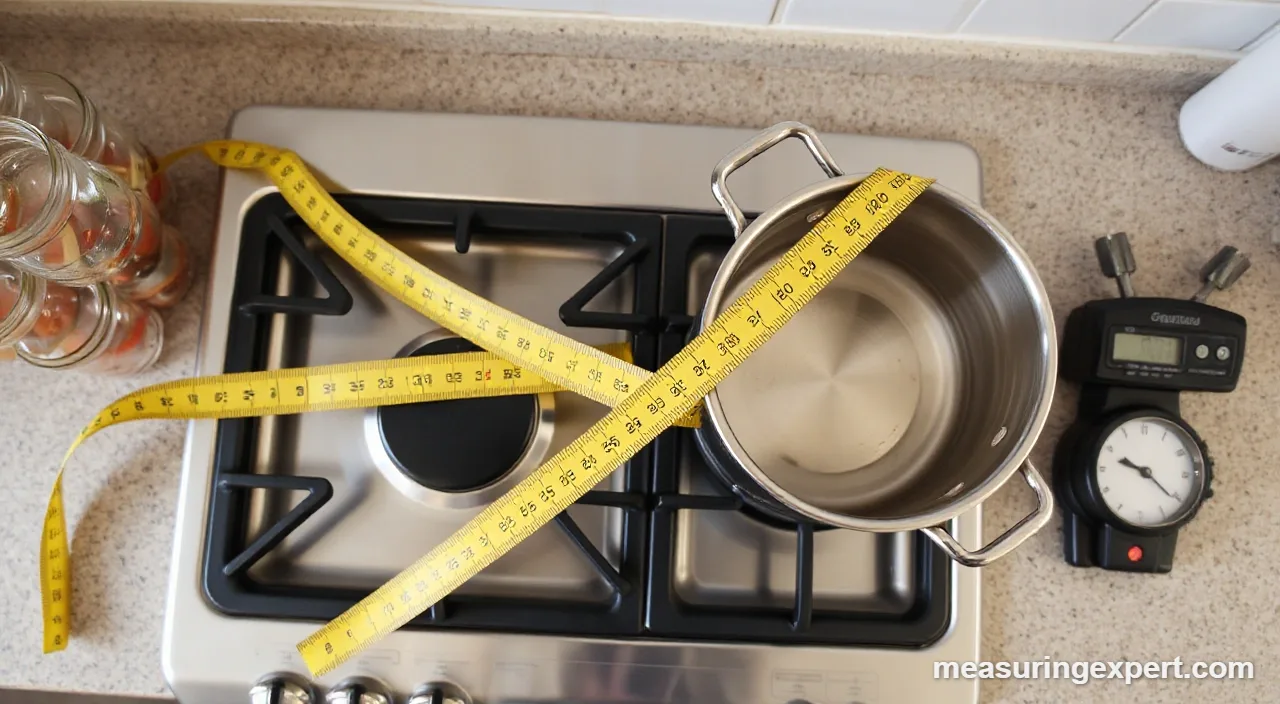
Size and gauge type go together because both set how you run the batch. A dial gauge lets you watch pressure in 1-pound steps, but it must be tested each year. A weighted gauge rocks or jiggles at fixed pressures and does not need yearly testing. The pressures below are the common low-acid settings from the USDA guidance, so always follow the number in your tested recipe.
| Altitude | Dial gauge (psi / kPa) | Weighted gauge (psi / kPa) |
|---|---|---|
| 0 to 1,000 ft (0 to 305 m) | 11 / 75.8 | 10 / 68.9 |
| 1,001 to 2,000 ft (305 to 610 m) | 11 / 75.8 | 15 / 103.4 |
| 2,001 to 4,000 ft (610 to 1,219 m) | 12 / 82.7 | 15 / 103.4 |
| 4,001 to 6,000 ft (1,219 to 1,829 m) | 13 / 89.6 | 15 / 103.4 |
| 6,001 to 8,000 ft (1,829 to 2,438 m) | 14 / 96.5 | 15 / 103.4 |
Convert with 1 psi = 6.894757293 kPa. Higher elevation needs more pressure because water boils at a lower temperature there. If you are unsure of your altitude, look it up before canning season.
Do and Don’t When Sizing a Canner
Do
- Choose a canner that holds at least four quart jars.
- Match capacity to your usual batch size.
- Measure the burner, height and storage shelf.
- Read the manual for rack and jar layout.
- Have a dial gauge tested every year.
Don’t
- Treat a pressure cooker as a canner.
- Buy the biggest model without checking your stove.
- Use a portable burner the maker warns against.
- Trust a gauge that was dropped or rusted.
- Rely on a half-remembered jar count; check the specs.
Honest Limits of Any Size Guide
No chart can promise the exact jar count for every canner. Racks, wall thickness, jar brands and even the shape of a jar shoulder change how many fit. Capacities in this guide are typical figures, and a particular model can hold fewer.
Size also does not replace a tested recipe. The canner you own is only one part of safe processing; the recipe, headspace, vent time and cool-down matter as much. If you scale a recipe up for a larger canner, keep the jar size and process time exactly as written, and do not change thickness or ingredients.
Finally, gauge accuracy drifts with age. A canner that was right five years ago can read two pounds off today, which is why yearly testing exists.
When to Call a Professional
Your county extension office or a master food preserver program is the right place to ask about gauge testing, recipes and altitude. If a gasket, vent pipe or safety plug looks worn, replace the part with one the manufacturer approves instead of improvising. Do not weld, drill or reshape a canner.
Frequently Asked Questions
What size pressure canner do I need for quart jars?
Choose one that holds at least four quart jars upright with the lid on, since that is the USDA minimum for tested processes. A 21 to 23 quart canner holds seven quarts in one layer, which suits most families.
What is the smallest pressure canner I can use?
The smallest acceptable canner holds four quart jars standing on the rack with the lid in place. Models around 10 to 12 quarts meet that, but a small pressure cooker or saucepan does not.
Can I can in a 6 or 8 quart pressure cooker?
No. Extension services say pressure cookers and saucepans heat and cool too quickly to process jars properly, so low-acid foods could be underprocessed. Use a real pressure canner for jars.
Can I use an Instant Pot to pressure can?
Not for low-acid foods. No university research has shown that electric multi-cookers hold a safe, steady temperature for jars. Use them for cooking, and use a pressure canner for preserving.
How many pint jars fit in a 23 quart canner?
Typically 19 or 20 pint jars in two layers with a rack between them, or 7 quarts in one layer. Always follow your own canner manual, because rack designs differ by model.
Is a bigger pressure canner always better?
No. Bigger canners take longer to heat, vent and cool, weigh more, and may not fit your burner. Choose the size that matches the batch you actually make.
Does canner size change processing time?
Tested recipes give times by jar size and altitude, not by canner size, as long as your canner meets the 4-quart-jar standard. Follow the recipe and venting steps exactly.
Can I pressure can on a glass-top stove?
Many manufacturers advise against it because the weight can crack the ceramic and cycling burners can drop the temperature. Check the canner and range manuals first, and consider a sturdy, level alternative if they forbid it.
How often should I test a dial gauge?
At least once a year before the canning season, and after a drop or other damage. Extension offices often test gauges, and a weighted gauge needs no yearly test but should be kept clean.
How many quarts is a pressure canner measured in?
The number is the canner total capacity in US quarts, for example 16 or 23. About 4 US quarts equal 3.8 liters, and the usable room for jars is smaller than the stamped number.
Bottom Line
The right pressure canner is the one that holds your typical batch, fits your burner and meets the four-quart-jar minimum. For most families that means 16 to 23 quarts, and for large gardens it means stepping up to 30 quarts or more.
Treat the quart number as a guide, check the jar count in the manual, test your gauge each year, and keep a real canner separate from the pressure cooker you use for dinner. With those basics set, canning day gets shorter and safer.
Add ad-free music to your kitchen or workshop